Events, Probability Laws, and Complements
Scope Label
Core 9758. This note covers the language and laws needed before conditional probability and independence.
Use it with the hub Probability.
Outcomes, Sample Spaces, and Events
An experiment is a chance process.
An outcome is one possible result.
The sample space is the set of all possible outcomes.
An event is a subset of .
A singleton such as is an event containing one outcome. The impossible event is ; the certain event is .
For a fair die,
If
then and are events inside the same sample space.
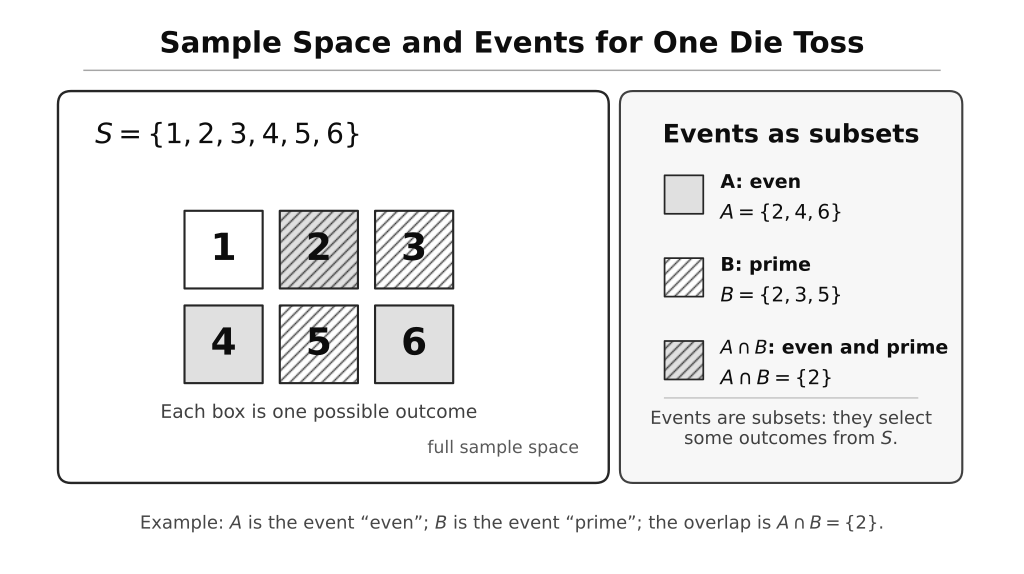 Caption: In a die experiment, events such as “even” and “prime” are subsets of the same sample space.
Why the Sample Space Matters
The sample space is not automatically every possible thing that could happen. It is the set of outcomes for the experiment currently being considered.
Changing the experiment can change the sample space. For example:
- throwing one die has sample space
- throwing two dice has ordered-pair outcomes such as
- choosing a card has outcomes based on cards, not die values
If the sample space is wrong, the probability calculation is usually wrong even if the formula is applied correctly.
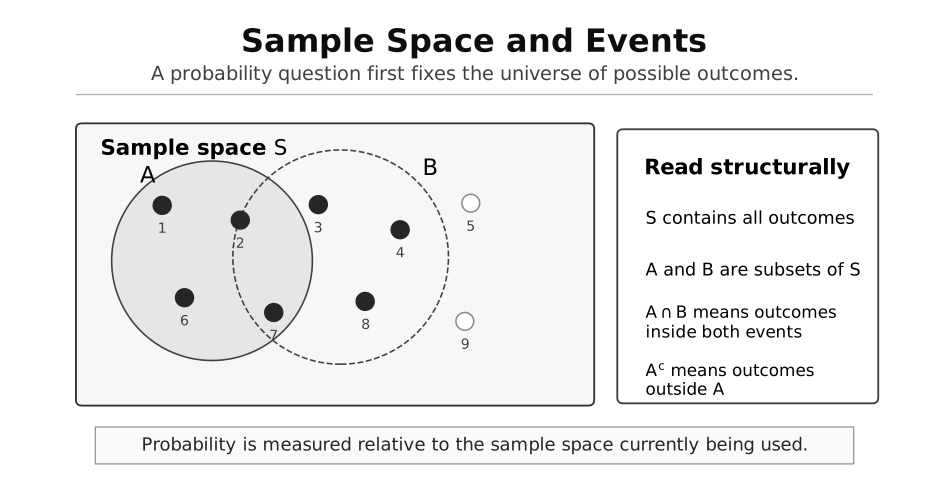 Caption: Probability starts by identifying the full sample space and then locating events as subsets inside it.
Event Operations
Union
means or or both.
The word “or” is usually inclusive in probability unless the question explicitly says otherwise.
Intersection
means both and occur.
This is the overlap of the two events.
Complement
means not .
The complement includes all outcomes in that are not in .
Mutually exclusive events
Events and are mutually exclusive if they cannot occur together:
In probability notation,
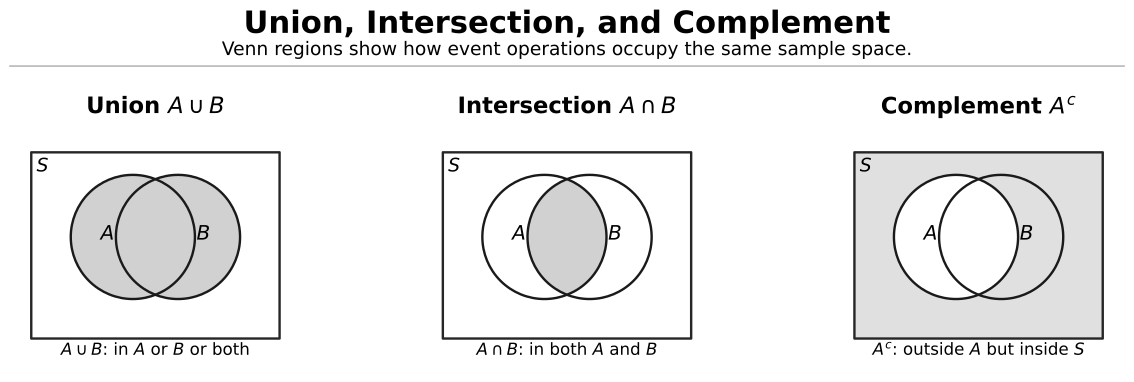 Caption: Union, intersection, and complement describe how events occupy regions within the same sample space.
Translating Words into Notation
Many probability errors begin with mistranslation.
| Words | Notation |
|---|---|
| or | |
| and | |
| not | |
| but not | |
| exactly one of and | |
| at least one of and | |
| neither nor |
De Morgan’s laws give
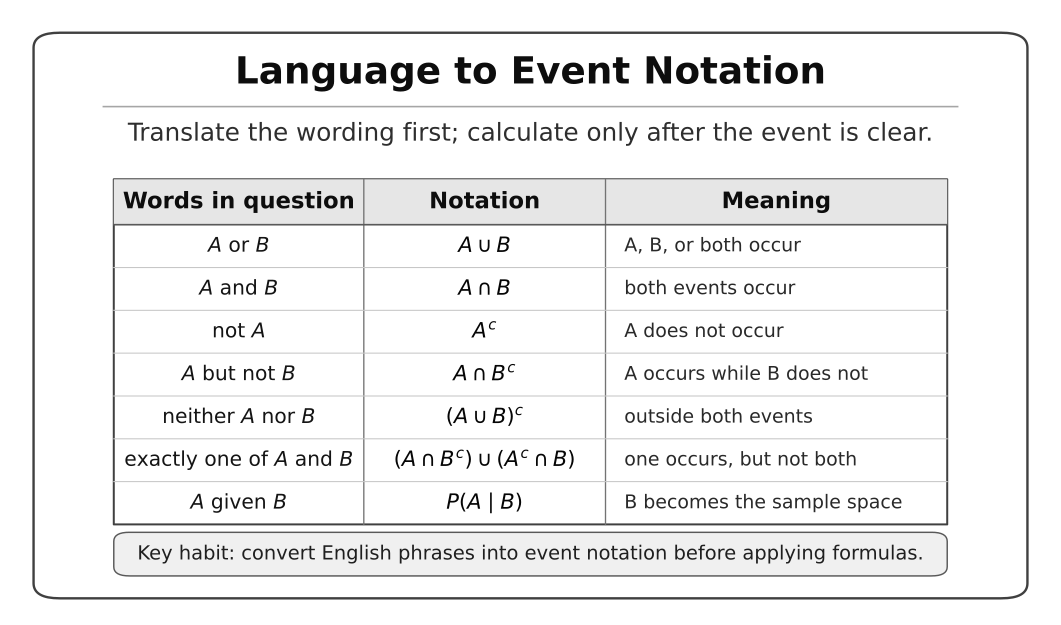 Caption: Probability questions often begin by translating ordinary language into event notation.
What Probability Means
A probability is a number between and :
If all outcomes in a finite sample space are equally likely, then
This counting ratio should only be used directly when the outcomes are equally likely.
For a finite non-uniform sample space, add probability masses instead:
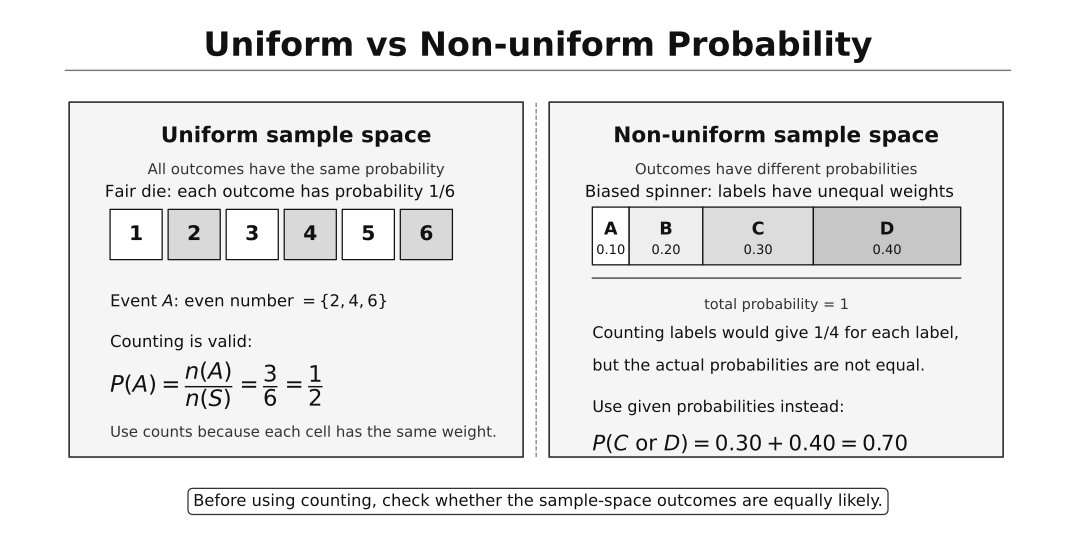 Caption: Counting methods apply directly only when the outcomes in the sample space are equally likely.
Basic Laws of Probability
Complement law
Since and together make the whole sample space,
Also,
If disjoint events exhaust , then .
General addition law
For any two events,
The overlap is subtracted because it is counted once in and once again in .
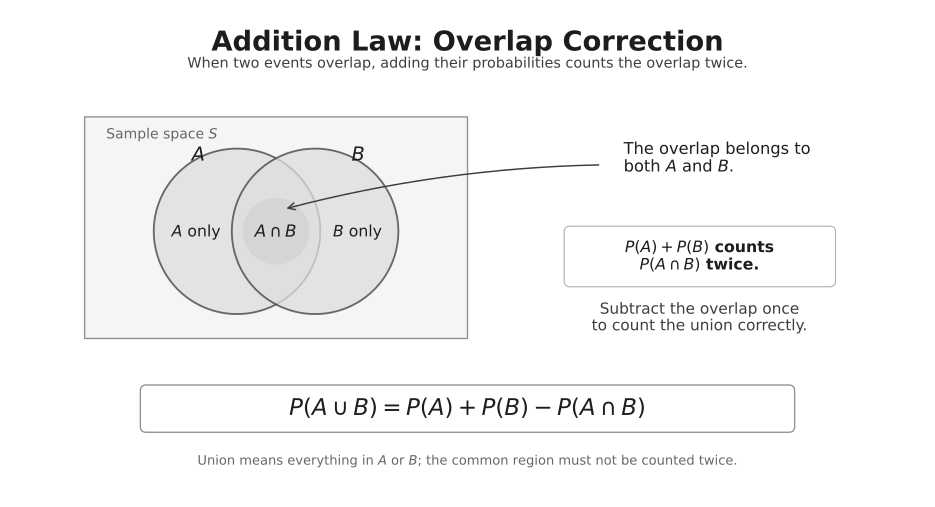 Caption: The addition law subtracts the overlap because it is counted twice in .
Mutually exclusive addition law
If and are mutually exclusive, then , so
This is a special case, not the general rule.
Complement Thinking
Complement thinking is useful when the direct event has many cases but the opposite event is simple.
The general idea is:
At least one
“At least one” often means:
For example, if three independent components each work with probability , then
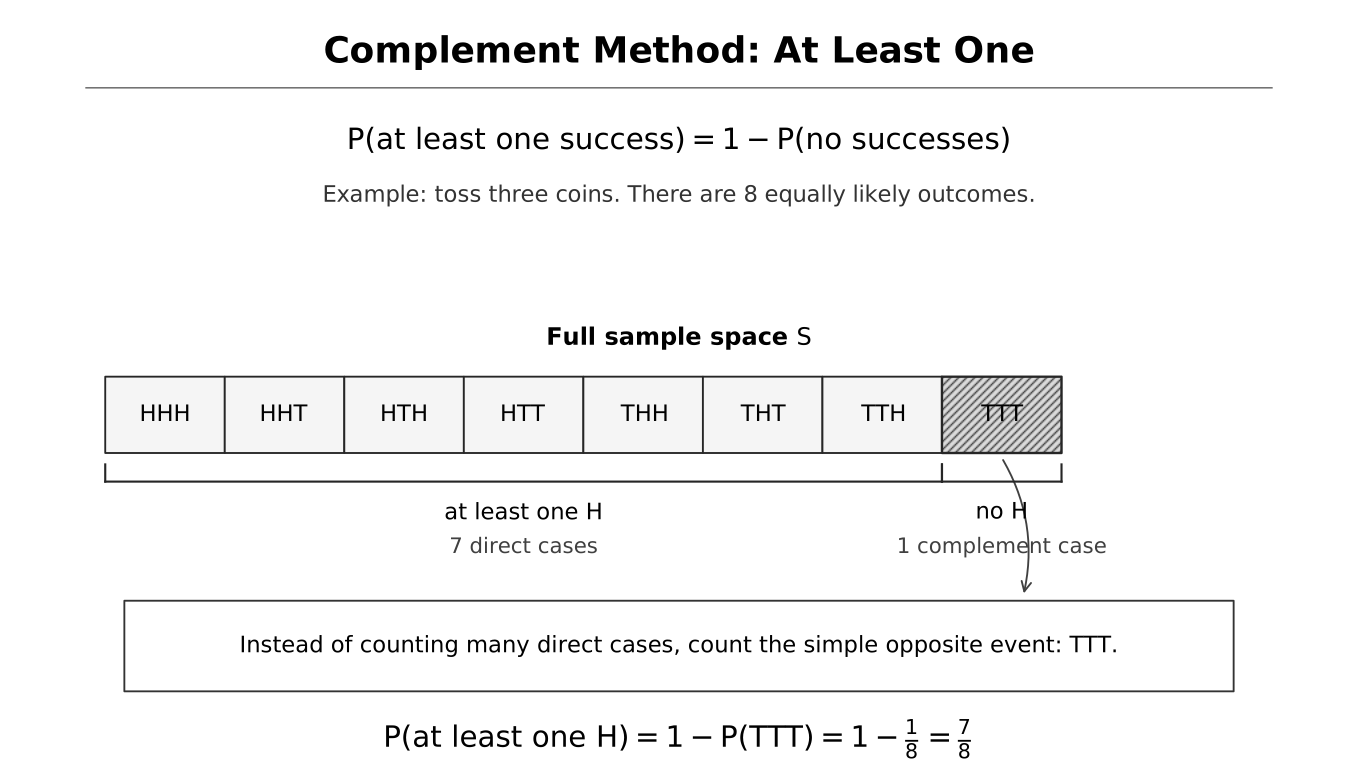 Caption: “At least one” is often easier to solve by subtracting the case where none occur.
Common complement patterns
| Direct phrase | Complement |
|---|---|
| at least one success | no successes |
| not all work | all work |
| at most | more than |
| no more than | at least |
| at least | fewer than |
Worked Core Examples
Example 1: Addition law
Suppose
Then
Example 2: Mutually exclusive events
If and are mutually exclusive and
then
We do not subtract an overlap because there is no overlap.
Example 3: Complement
If a fair die is thrown twice, find the probability of at least one six.
The complement is no six on either throw:
Example 4: Table of outcomes
Two fair dice, one red and one blue, are rolled once. Let
and
There are equally likely ordered outcomes.
For , first count the outcomes in . At least one die shows , so there are
such outcomes. The subtraction avoids double-counting .
Inside , the outcomes with sum are
Hence
This is why a table of outcomes is useful: when two finite experiments happen together, the table makes intersections and conditional reference spaces visible.
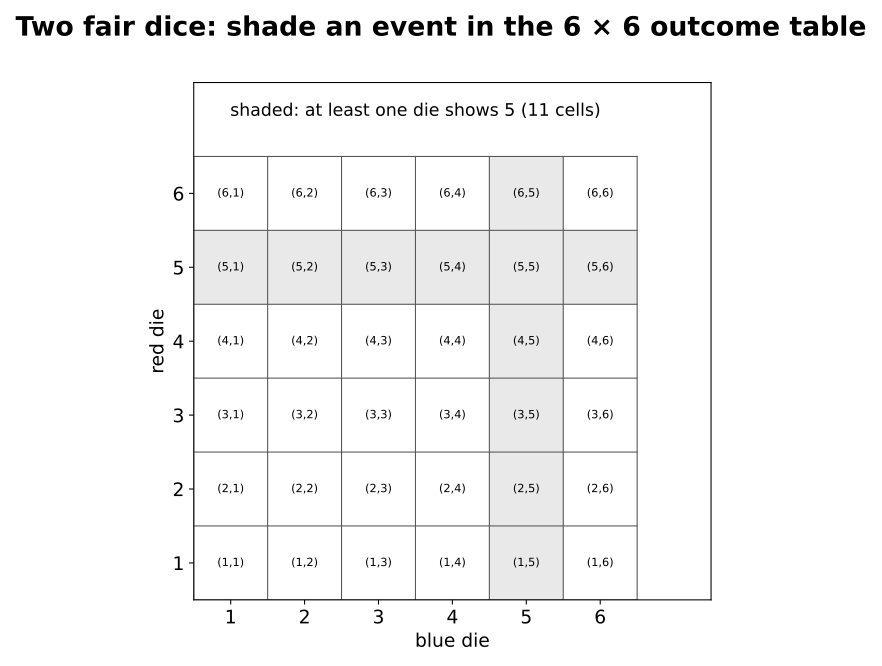
How to read this figure. Rows and columns define ordered outcomes. With equally likely dice cells, count shaded cells out of . In a non-uniform joint table, add cell probabilities instead; multiplying row and column probabilities requires independence.
Example 5: Using counting without replacement
Three cards are drawn from a standard deck of cards. Find the probability that exactly two are aces.
Since order is not important, use combinations.
Choose aces from the aces and non-ace from the remaining cards:
The total number of ways to choose cards from is
Therefore,
This example belongs in probability rather than only in permutations and combinations because the counting is being used to form a probability ratio.
Common Pitfalls
- Treating “or” as exclusive when the question does not say so.
- Using without checking overlap.
- Forgetting that depends on the current sample space.
- Using counting ratios when outcomes are not equally likely.
- Counting “at least one” directly when the complement is simpler.
- Forgetting whether the experiment treats outcomes as ordered or unordered.