Conditional Probability, Independence, and Trees
Scope Label
Core 9758. This note develops the second layer of H2 probability: how probabilities change after information is given, how multi-stage processes are represented, and what independence means.
Use it with the hub Probability.
Conditional Probability as a Reduced Sample Space
Conditional probability means probability after some information is known.
The probability of given is
This formula should be read conceptually:
restrict attention to the part of the sample space where occurred, then ask what proportion also lies in .
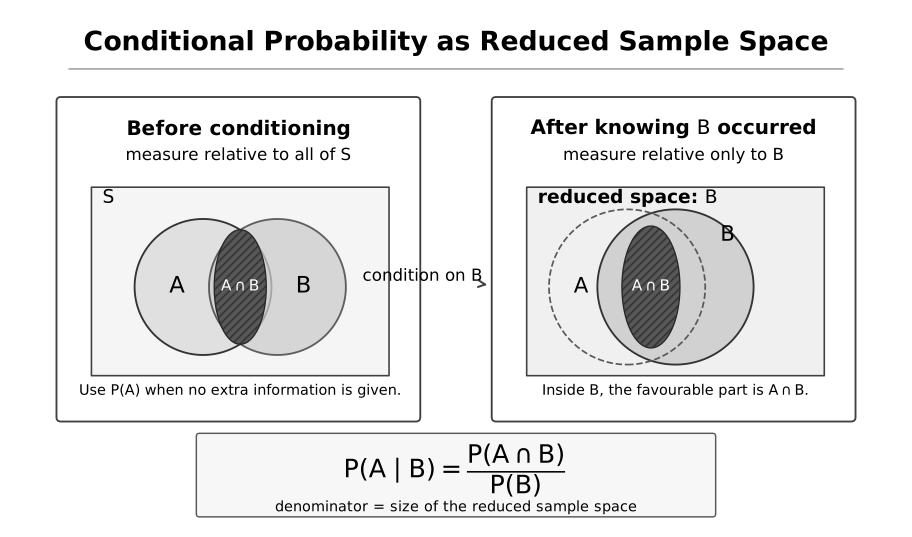 Caption: Conditional probability changes the reference universe from the whole sample space to the event that is already known to have occurred.
Example: Die Reduced Sample Space
A fair die is thrown. Let
Then
Given that occurred, the relevant sample space is no longer . It is only
Inside , the even outcomes are . Hence
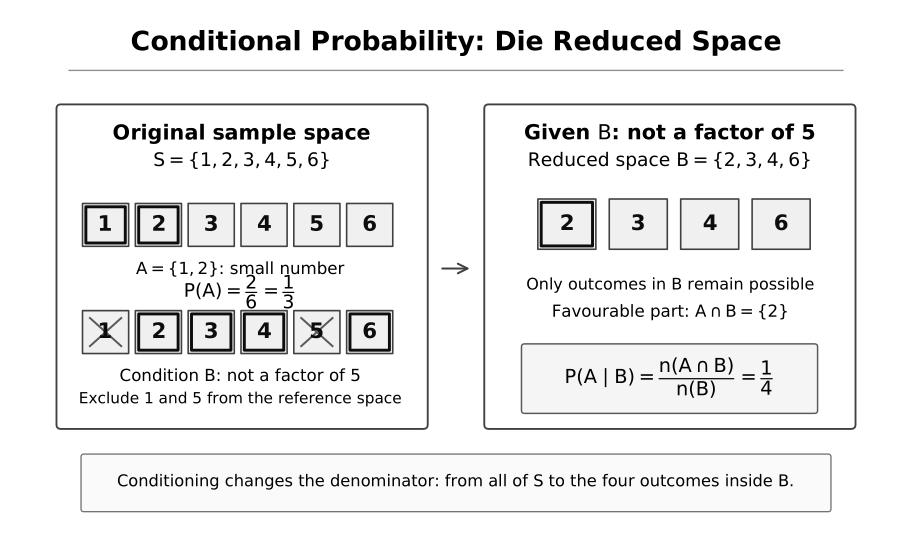
How to read this figure. The revised figure uses the worked events above: inside , the outcomes and also satisfy , so .
Why and Are Different
The expressions and use the same overlap , but they divide by different reference spaces:
So they are generally not equal.
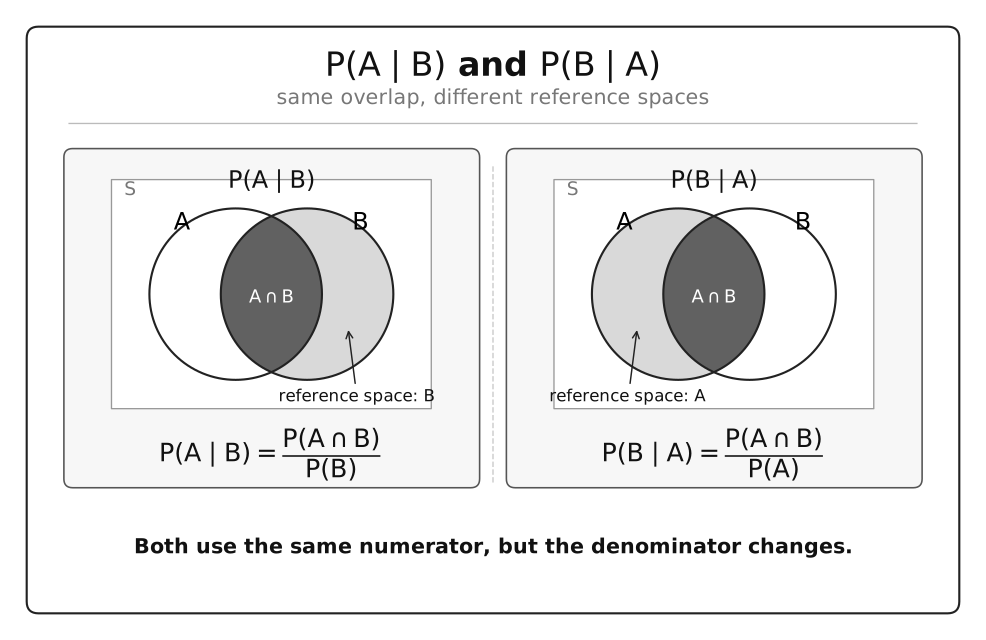 Caption: and use the same overlap but different reference spaces.
Total Probability and Bayes’ Theorem
Let be mutually exclusive and exhaustive hypotheses. Every occurrence of evidence arrives through exactly one hypothesis, so
Bayes’ theorem then gives, for ,
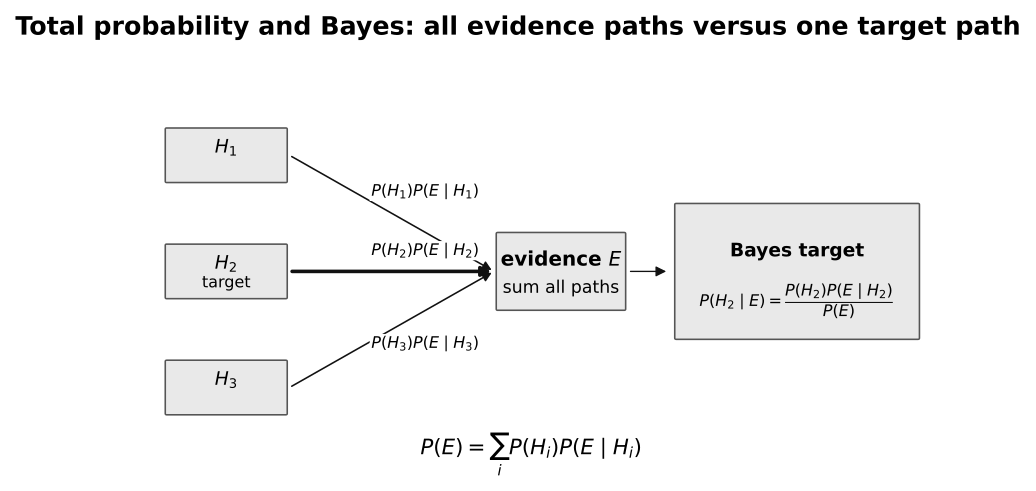
How to read this figure. The denominator adds every mutually exclusive route that produces ; the numerator keeps only the target route through .
Two-event form
Bayes’ theorem is a way to reverse a conditional probability when the reverse direction is easier to model.
Starting from
and also
we get
This is useful when a question gives information such as a test result and asks for the probability of the underlying cause. The denominator must refer to the total probability of observing , often found by splitting into cases.
General Multiplication Rule
Starting from
we get
Equivalently,
This is the general multiplication rule. It does not require independence.
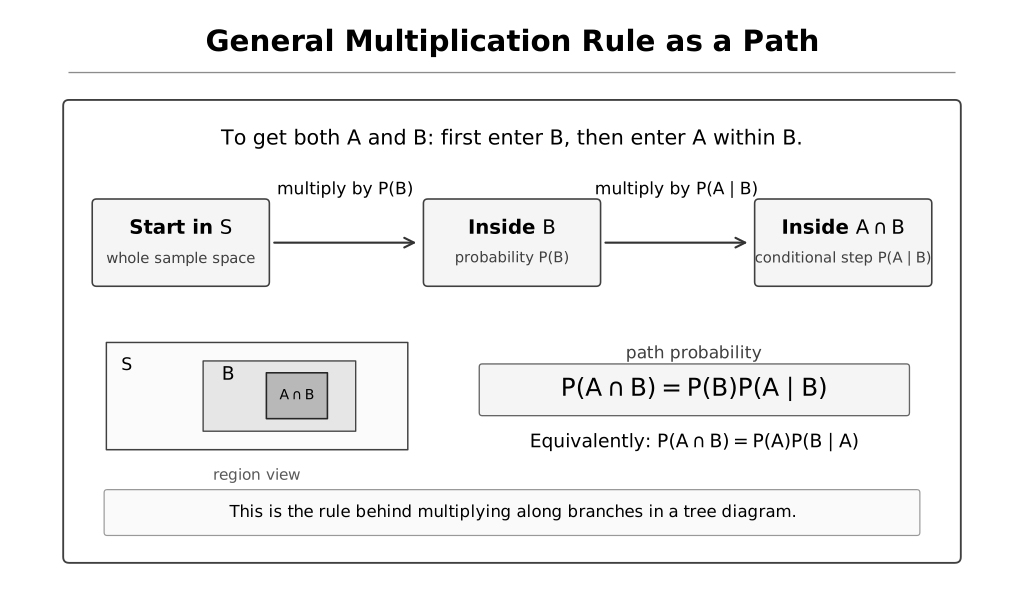 Caption: The multiplication rule can be read as the probability of moving along a path into and then into within .
Tree Diagrams
Tree diagrams are useful for multi-stage experiments, especially when probabilities change from one stage to the next.
The rule is:
- multiply along a branch to get a path probability
- add the path probabilities that satisfy the required event
At every node, outgoing branches are an exhaustive conditional split and sum to . Later branches are conditional on the entire history leading to that node. Complete terminal paths are mutually exclusive, so selected complete-path probabilities may be added. Drawing a tree does not itself imply independence.
For example, if a bag has changing composition after a draw without replacement, a tree diagram records the conditional probabilities on the second draw.
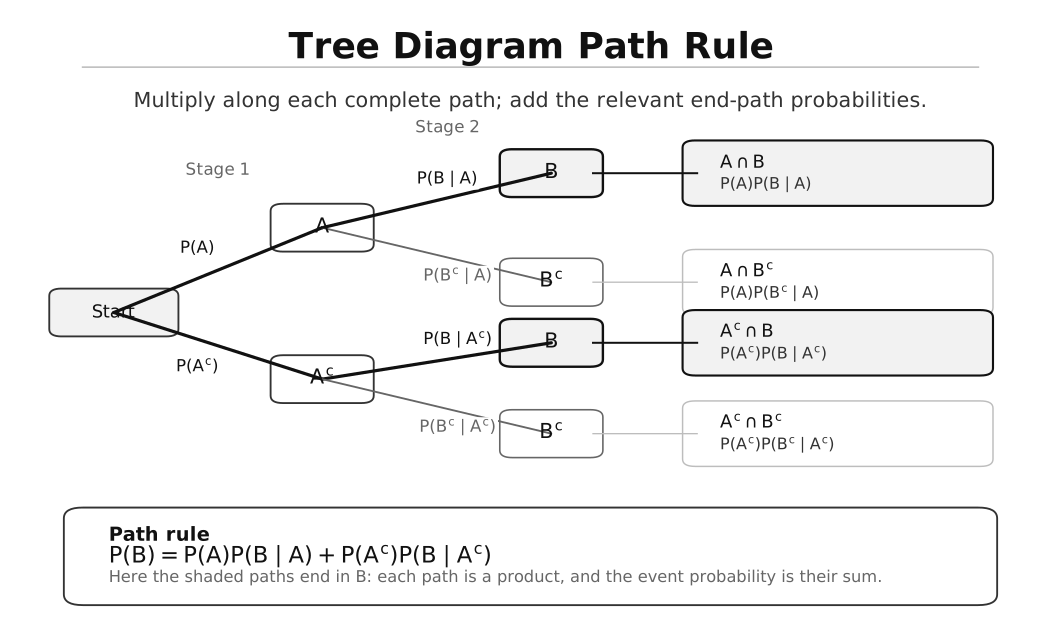
How to read this figure. Check that each node sums to , multiply conditional probabilities along each complete path, then add only the mutually exclusive paths belonging to the event.
With and without replacement
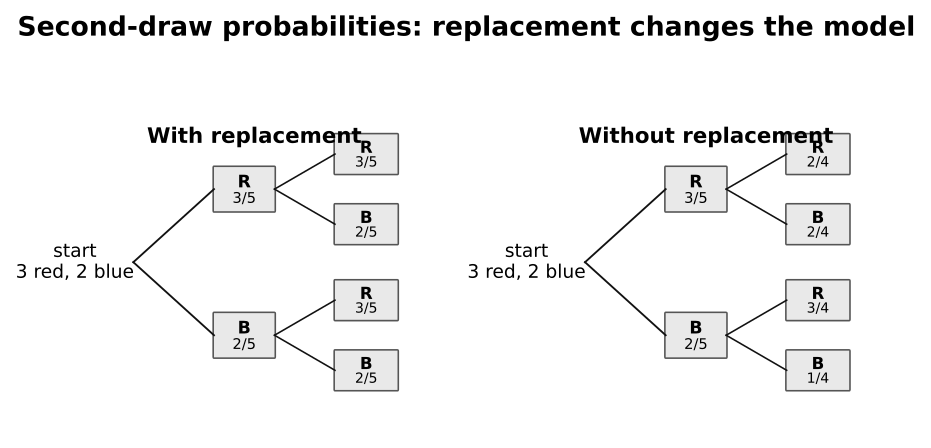
How to read this figure. Replacement restores the composition, so the second-stage probabilities repeat. Without replacement, the available counts and denominator change after the first draw.
Independence
Events and are independent if knowing that one occurred does not change the probability of the other.
This can be written as
provided .
Equivalently,
This product form is often the easiest way to test independence.
When the conditionals exist, independence is symmetric: and . The product criterion is safest when a marginal probability may be zero.
Independence is preserved by complements. For example,
Similarly, and are independent.
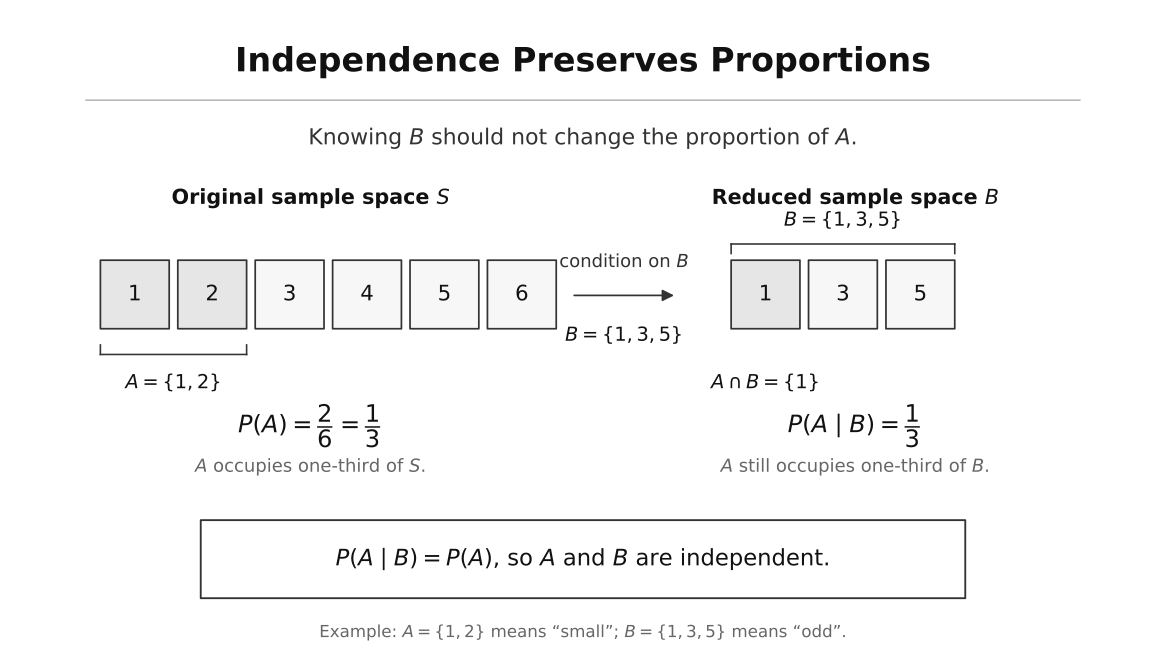 Caption: For independent events, the proportion of remains the same after restricting the sample space to .
Independence Is Not Mutual Exclusivity
Mutually exclusive events cannot happen together:
Independent events preserve probabilities:
These are different ideas. If and , mutually exclusive events cannot be independent, because knowing occurred makes impossible.
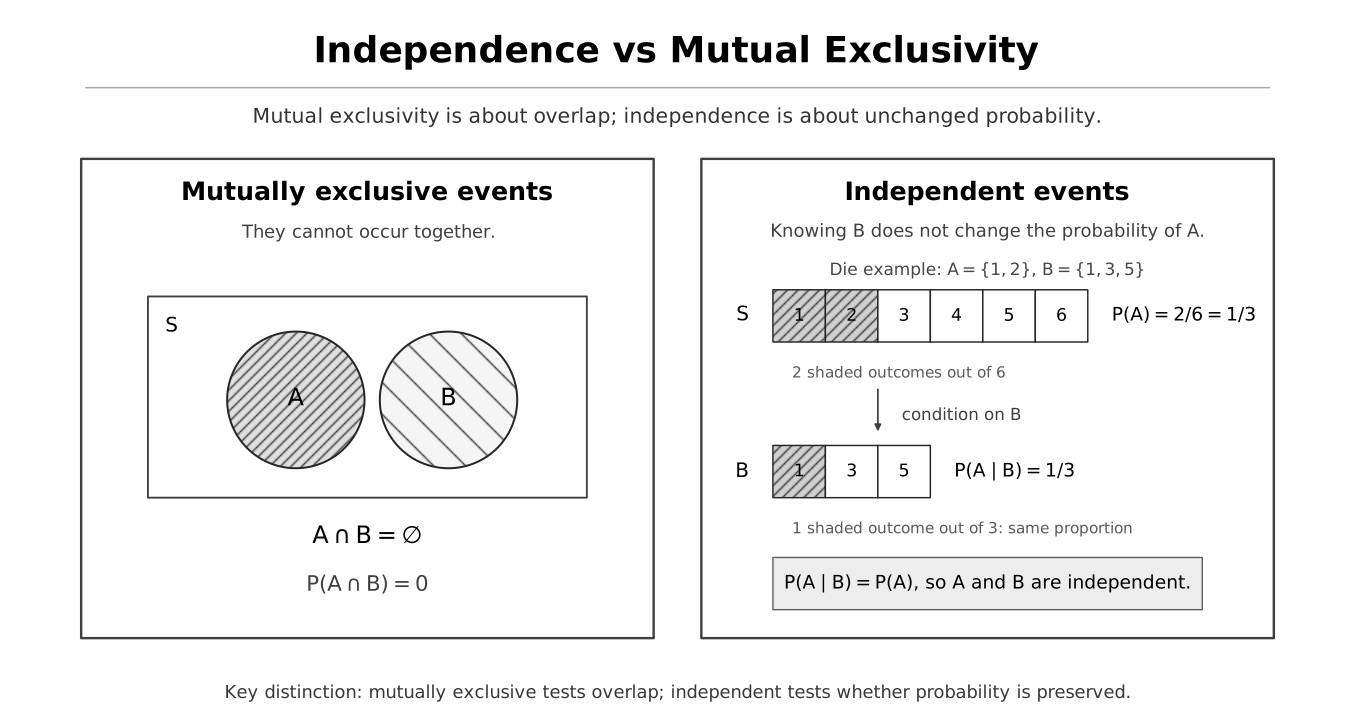 Caption: Mutually exclusive events concern overlap; independent events concern whether one event changes the probability of the other.
Choosing the Right Representation
Use the representation that matches the structure:
| Structure | Representation |
|---|---|
| Two categorical variables | table |
| Event overlap | Venn diagram |
| Stages with changing probabilities | tree diagram |
| Selection from equally likely outcomes | counting |
| Given information | conditional probability |
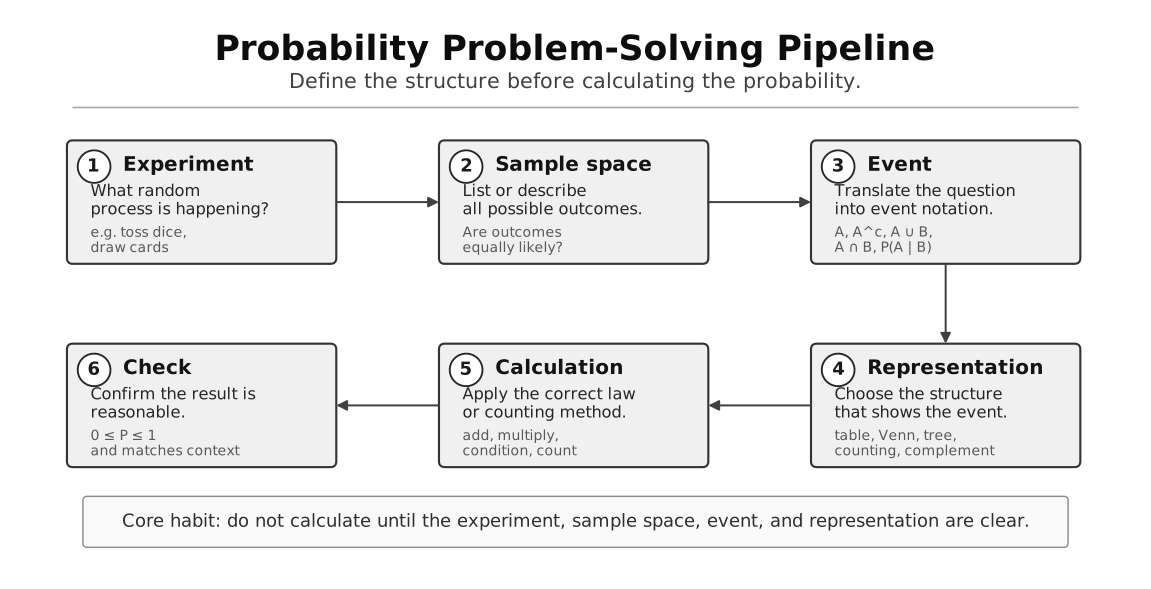 Caption: A disciplined probability solution moves from experiment to sample space, event definition, representation, and calculation.
Worked Core Examples
Example 1: Conditional probability
Suppose
Then
Example 2: Multiplication rule
If
then
Example 3: Independence test
Suppose
Since
the events are independent.
Example 4: Tree path probability
A test has two stages. Suppose the probability of passing stage 1 is , and the probability of passing stage 2 given stage 1 is passed is .
The probability of passing both stages is
This is multiplication along a path.
Example 5: Bayes’ theorem with faulty items
Two companies make camera lenses. Company makes of the lenses and company makes .
Suppose of lenses made by are faulty, while of lenses made by are faulty.
Let
and
First find the total probability that a lens is faulty:
So
Now find the probability that a faulty lens came from company :
The reversal is the key point. The given data tells us faulty probabilities within each company, but the question asks for the company after observing a faulty lens.
Example 6: Exactly one faulty item
Using the same lens data, suppose two lenses are selected independently from the production stream. Find the probability that exactly one lens is faulty.
This is an explicit sampling assumption. Drawing two items without replacement from one finite batch would generally produce dependent outcomes and changing branch probabilities.
From the previous example,
Exactly one faulty lens can happen in two orders:
- first faulty, second not faulty
- first not faulty, second faulty
So
Thus
This is a tree-diagram situation because the event is built from paths. The two paths are mutually exclusive, so their probabilities are added.
Example 7: Independence using a table
Two fair dice, one red and one blue, are rolled. Let
and
Then
because the red die can be or , and the blue die can be anything.
Also,
The outcomes in are
so
Since
we have
Therefore and are independent.
This example is useful because the events do overlap, but the overlap has exactly the size expected under independence. Independence is not the same as having no overlap.
Common Pitfalls
- Treating and as the same.
- Using without independence.
- Forgetting that tree branches after the first stage are conditional probabilities.
- Adding branch probabilities when the paths should be multiplied.
- Confusing mutually exclusive events with independent events.
- Thinking a Venn diagram can visually prove independence without calculation.
- Forgetting to find the total probability in the denominator of a Bayes calculation.
- Missing one of the possible orders when finding “exactly one” in a two-stage process.